
Making your artworks look their very best
Don’t worry if you don’t know the first thing about framing – that’s our job! We have years of experience and two of our team, James and LaVerne, are Guild Commended Framers.
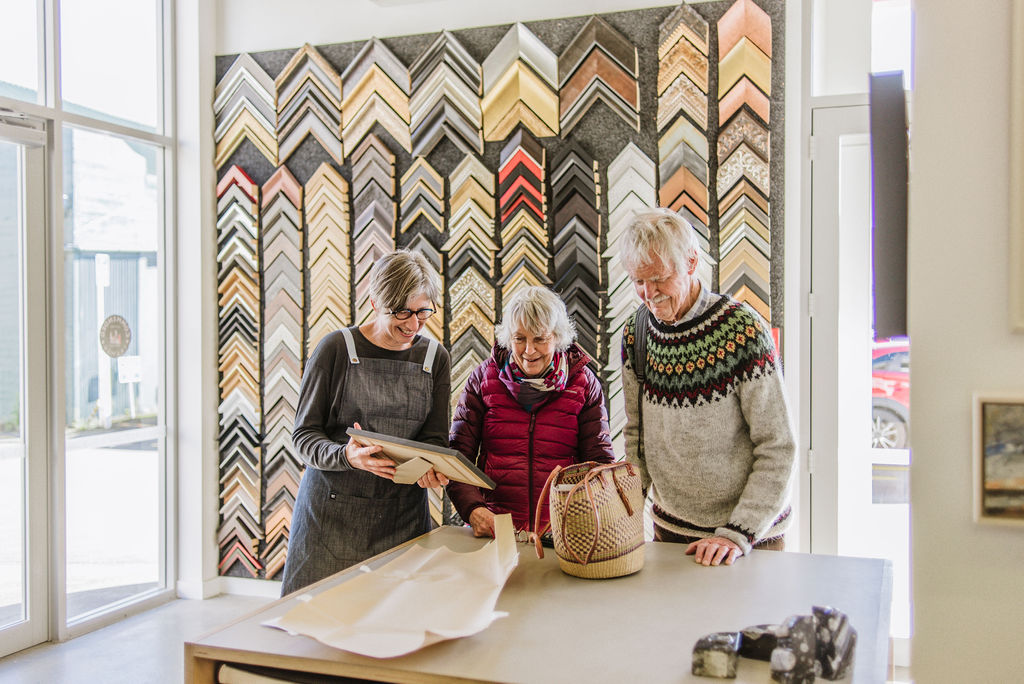
Framing Consultations
When you bring in your framing we consider a couple of things. We will show you the framing combinations that will show off your artwork in the best way. We will also talk to you about the kind of aesthetic you like and what will work in your home or work place.
You may know exactly what you want or you may want our guidance. We’re here to help. We will tell you the cost of your framing when you drop off your work so there are no surprises when you come to collect. Our turn-around time is usually a couple of weeks but if you need something in a hurry let us know.
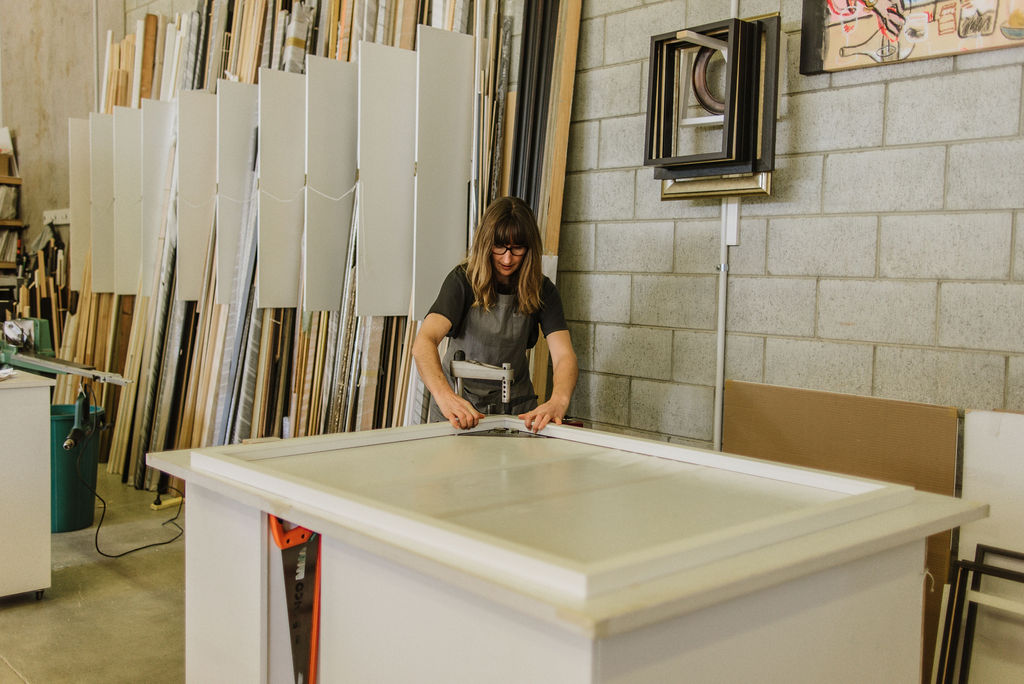
Bespoke and Hand-Made
Everything we do is made by hand here in our Nelson workshop. When you bring in your artworks you will be able to see the team at work. Our frames are sourced from New Zealand and overseas. We have a beautiful range of top quality Italian frames for those extra special jobs.
As well as art, we frame mirrors to your specification. Ornate, classical and contemporary – we have a wonderful range of frames to choose from.
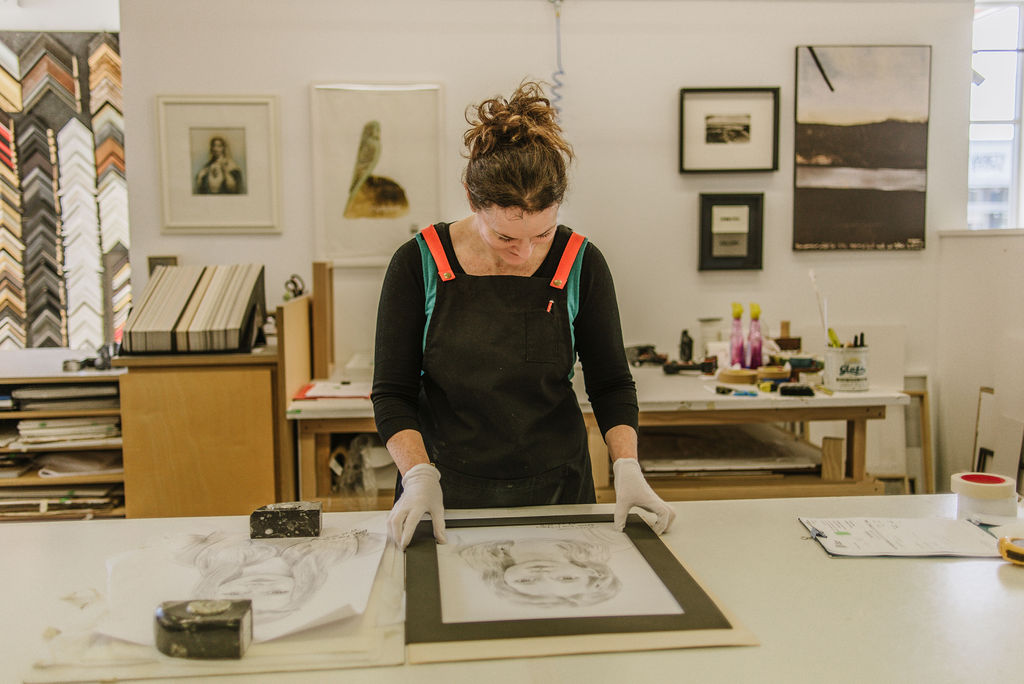
Conservation Framing
Our framing techniques and archival materials mean that your artworks are protected as much as possible from the harm caused by light, insects and moisture in the environment. If an artwork that you care about has been framed for more than 20 years it is advisable to bring it along to us for a ‘Warrant of Fitness’.
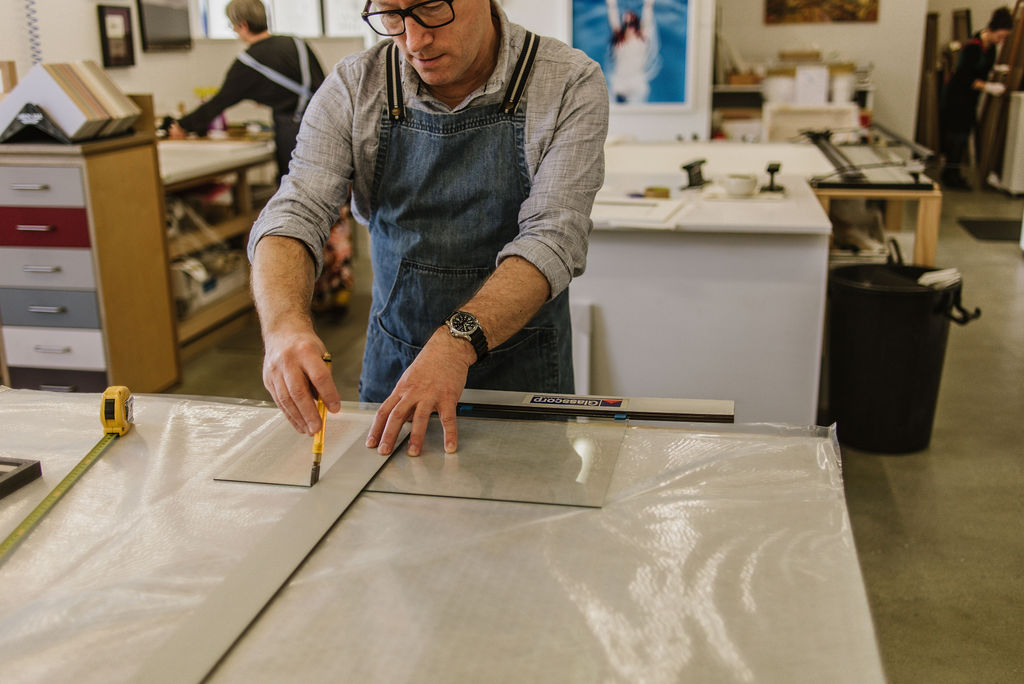
Glass
We offer all types of glass from regular picture glass, which is the most economical, through to Museum Glass that is ultra clear and offers protection from fading due to UV light.
Sometimes accidents happen and artworks can fall from the wall. If this happens to you bring the framed work to us. We will remove the broken glass and put in a new piece. Easy!
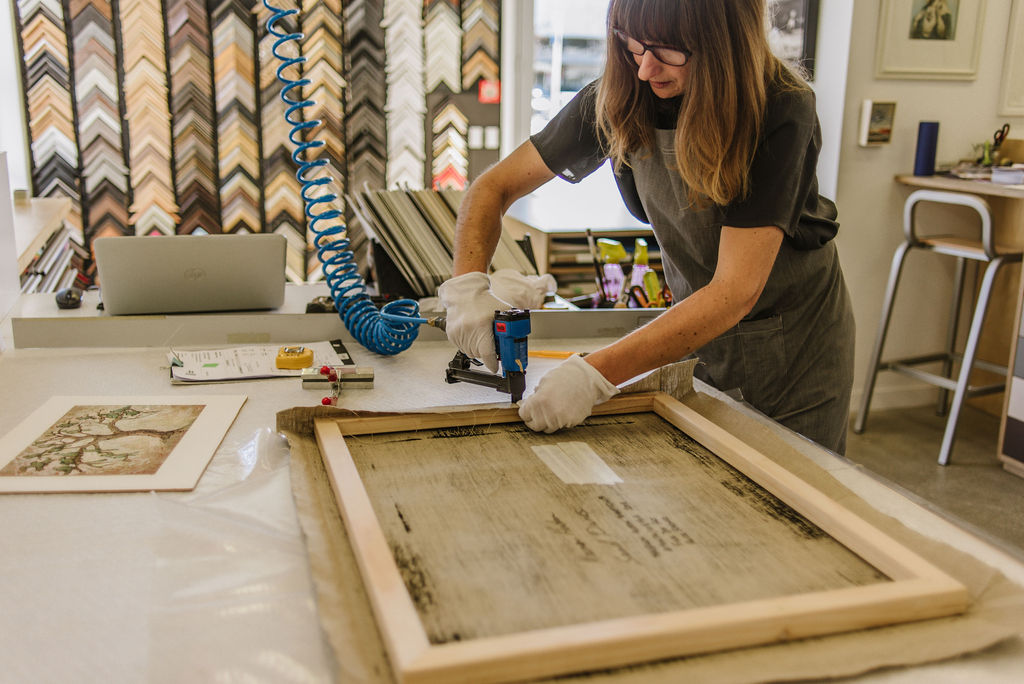
Stretching a canvas
Paintings on canvas generally need to be stretched around a sub-frame. The tensioning makes the surface of the painting flat and it enables the artwork to be easily hung on a wall. Stretched canvases can have an additional frame to give them more status on the wall. Talk to us about options.
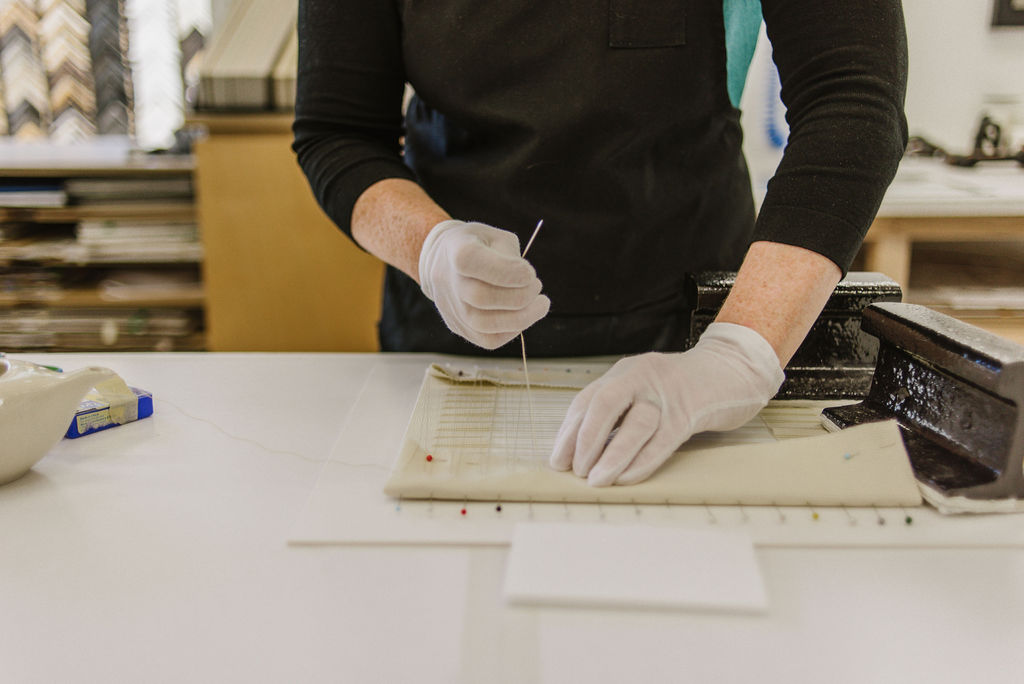
Framing Textiles
We are experienced in the framing of cross stitches and embroideries. The photograph shows the back of a cross stitch being laced. This process ensures that the textile piece stays taut and straight.
We also frame sport jerseys, tea towels and any other fabrics.
FRAMING
What do you frame?
The short answer is everything – pretty much! If you want to hang it on your wall we can frame it. There’s the obvious items such as oil paintings, photography, posters, prints, paintings on canvas, sports jerseys, certificates, tea towels, tapestries, medals and other memorabilia. Then there are the more unusual things… for example last year we framed a tiny fish skeleton, a four leaf clover, a tin can and remnants of wallpaper from more than a 100 years ago. We love a challenge so come along with your interesting pieces.
Will my framing be expensive?
We realise that this is a big concern for a lot of people these days and unfortunately the cost of framing has gone up like everything else. We aim to provide customers with the best value for money so let us know when you arrive if you’d like to see the most economical options. The benefit of having your artwork custom framed is that you’ll be investing in quality framing that will last.
You are welcome to give us a call for a quote. We’ll ask you what it is you want to frame, the size and what you have in mind. This will be an estimate which we can confirm when we see you with the actual work you want framed. As a general guide most custom framing starts at around $100 for small, basic jobs. For an A3 print the cost is around $150. You need to budget for around $200 for a certificate and a sports jersey is generally around the $600 mark.
How long will my framing take to do?
We generally work to a two or three week turn-around but let us know if you have a deadline and we will do our best to meet it. If you are an artist framing a series of works for an exhibition it’s a good idea to give us a 6 week head start. We don’t need all your work but it’s a great idea to start talking about ideas and we can order in the materials we are going to need.
Do I need to make an appointment?
You can just come in whenever it suits you. We are open from 9am – 5pm Monday – Friday and on Saturday mornings.
How do I frame a painting on canvas?
Most paintings on canvas are stretched around a pine subframe that keeps the canvas taut. We can do this for you if your canvas is loose. You can hang the canvas on your wall just like this but it can look better if the painting has a tray frame. This is a narrow frame that the canvas sits within. A narrow gap is created so there is space around the painting – just enough so that it seems the work is floating within the frame. This works particularly well for smaller paintings as the frame gives the work more status on the wall. The other advantage is that the frame can hide any messy edges. Take a look on our ideas page.
Do I need to use glass on my artwork?
If you have a work on paper, which includes photography, it is recommended that you use glass. The job of the glass is to protect your artwork from insects, dust and any other kinds of damage. The same is true for other fragile surfaces such as textiles. If you are bothered by the reflection caused by glass there is a fabulous anti-glare glass that is now fairly affordable. If you have a painting on canvas, which is usually an acrylic or an oil, then glass is not necessary.
What does it mean when a framer talks about an artwork being ‘floated’
Sometimes an artwork goes right to the edge of the paper and you want to see this detail. Sometimes the paper itself has a torn edge that looks good. Other times an artist may have signed right at the bottom corner and you may want this signature visable. These are all good reasons for the paper not to have a window mat but be ‘floated’ on top of the matboard. Sometimes the work is elevated using an additional layer of foamcore. The artwork is attached at strategic places using conservation tape. The glass should be spaced away from the artwork using spacers inside the frame.
When is it better to use a window mount?
A window inside the mount can be a good way of giving more emphasis to a work. It’s a more formal style so works really well for certificates, watercolours, traditional paintings and memorabilia. The mount keeps paper flat and it gives a few millimetres of space between the glass and the artwork. This is important to avoid issues with condensation.
Do you offer a picture hanging service?
We don’t, but we can put you in touch with someone who can.